Greek Easter: A Culinary Guide to Lent, Feasts & Traditions
Imagine a home filled with the intoxicating aromas of citrus, warm spices, and freshly baked bread. Laughter echoes from the kitchen, pots clatter, and the air hums with anticipation. This isn't just any holiday; it's Greek Easter, a celebration that transcends a single day, unfolding into a profound culinary and cultural journey. If you're eager to understand why your Greek friends vanish into a whirlwind of tradition each spring, or simply seeking an unparalleled foodie adventure, this
greek easter guide is your gateway to an unforgettable experience.
For Greeks, Easter isn't merely a religious observance; it's the pinnacle of the year, overshadowing even Christmas in its grandeur, communal spirit, and, most certainly, its gastronomic delights. It’s a time when family bonds are strengthened, ancient customs are revered, and the kitchen truly becomes the heart of the home.
What Makes Greek Easter Unique? (More Than Just a Date)
One of the first things people notice about Greek Easter is its date, which often differs from Western Christian Easter. This divergence stems from the Greek Orthodox Church’s adherence to the Julian calendar, as well as a mandate that Easter must always fall after the Jewish Passover. While the exact date shifts each year – for example, in 2024, it falls on May 5th – its timing is less significant than the deep-rooted meaning it holds for the Greek people.
For Greeks, this isn't just *a* holiday; it's *the* holiday. It’s louder, longer, and undeniably more delicious than any other. Growing up in a Greek household, Christmas might have been nice, but Easter was everything. It's a period of deep reflection followed by an explosion of joy, marked by specific rituals and, of course, an extraordinary parade of food. To delve deeper into its profound cultural impact, read
Why Greek Easter is Bigger Than Christmas: Dates & Customs.
Sarakosti: A Culinary Exploration of Greek Lent
The path to Greek Easter is paved by "Sarakosti," the forty-day period of Great Lent. This solemn observance is traditionally characterized by a strict dietary fast, abstaining from meat, dairy, and eggs. Even fish is largely excluded, with only certain days, like Palm Sunday, allowing its consumption.
However, the reality of Sarakosti in modern Greece, and among Greeks worldwide, is often more nuanced. While many devout individuals meticulously follow the full forty days, others, including many families, focus their fasting efforts primarily on Holy Week, the final week leading up to Easter Sunday. There’s no judgment, only a deep respect for individual observance. What's truly remarkable about this period, whether you're strictly adhering to Lent, exploring a plant-based diet, or simply seeking incredible meatless meals, is how brilliantly Greek cuisine shines.
Delicious Lenten Staples: Beyond Basic Fasting
Greek Lenten dishes are a testament to the ingenuity and richness of Mediterranean flavors. Far from being restrictive, these recipes transform humble ingredients into vibrant, satisfying meals.
*
Lenten Soups and Mains:
*
Vegan Avgolemono: A surprising twist on the classic, this creamy, lemony soup achieves its luxurious texture without eggs or dairy, offering pure comfort in a bowl. It often uses cornstarch or even finely blended vegetables for thickening.
*
Vegan Moussaka: Layers of rich flavor, typically featuring eggplant, potatoes, and a hearty lentil or mushroom "mince" instead of ground meat, all crowned with a luscious béchamel made from plant-based milk and flour.
*
Vegan Greek "Meatballs" (Keftedes): Herby, hearty, and packed with flavor from ingredients like chickpeas, lentils, or mushrooms, these are perfect served with warm pita and a side of fresh tomato salad.
*
One-Pot Greek Vegetarian Pasta: A weeknight hero, combining pasta with fresh tomatoes, olives, herbs, and perhaps some spinach or zucchini, all cooked together for maximum flavor and minimal cleanup.
*
Lenten Dips, Sides, and Snacks:
*
Vegan Spanakopita: Flaky phyllo pastry encasing a savory filling of spinach, leeks, and herbs, expertly crafted to be just as crispy and satisfying without the traditional feta cheese (often replaced with a tofu or nut-based "feta").
*
Fava Bean Hummus: A smooth and bright dip made from split fava beans, garlic, lemon, and olive oil, offering a delightful alternative to chickpea hummus.
*
Skordalia: A bold, naturally vegan garlic and potato or bread dip, often served with fried fish or boiled beets, known for its intense, pungent flavor.
*
Fakes (Greek Lentil Soup): A simple yet profoundly satisfying traditional lentil soup, rich in nutrients and flavor, embodying the essence of Lenten simplicity and wholesomeness.
On designated "seafood days," such as Palm Sunday, the fast allows for the inclusion of fish. This opens up options like succulent Sheet Pan Salmon with lemon and herbs, or simple grilled fish and seafood dishes, often accompanied by crisp greens and a drizzle of exquisite olive oil.
Holy Week: The Buildup to the Grand Feast
As Sarakosti draws to a close, Holy Week commences, transforming the culinary landscape and intensifying the preparations for the Easter feast. By Holy Wednesday, the scent of butter, orange zest, and the delicate aroma of mastic begin to permeate Greek homes, signaling the creation of beloved holiday staples.
Holy Wednesday & Thursday: Baking and Red Eggs
The most iconic of these preparations is
Tsoureki, a traditional Greek sweet, braided holiday bread. More than just a delicious treat, its braided form symbolizes the Holy Trinity and the resurrection of Christ. Infused with exotic spices like mahleb and mastic, and brightened with orange zest, tsoureki’s irresistible aroma fills the house, building anticipation for the days to come.
Holy Thursday is dedicated to the dyeing of the traditional red eggs. These vibrant eggs symbolize the blood of Christ and the promise of resurrection. It's a cherished family activity; many Greeks have childhood memories of stirring the dye pot, perhaps even accidentally staining a favorite shirt! On Easter Sunday, these eggs become props in a playful game called
tsougrisma. Family members tap their red eggs together, trying to crack their opponent's while keeping their own intact. The person whose egg remains uncracked is said to have good luck for the year, symbolizing the conquering of the tomb. For more on these essential traditions, check out
Red Eggs to Tsoureki: Greek Easter's Essential Food Traditions.
Good Friday: Solemnity and Reflection
Good Friday is the most solemn day of Holy Week. The evening air is thick with the scent of jasmine and incense, church bells toll mournfully, and a quiet reverence settles over communities. It’s a day of deep reflection and strict fasting, often involving only water, bread, or very simple, uncooked meals, as Greeks mourn the crucifixion of Christ. Many attend evening church services, where the Epitaphios (Christ's symbolic bier) is adorned with flowers and carried in a solemn procession through the streets.
Easter Sunday: The Ultimate Greek Feast
The culmination of forty days of fasting and a week of solemn reflection arrives with the joyous declaration of "Christos Anesti!" (Christ is Risen!) on Easter Sunday morning. This joyous greeting marks the end of the fast and the beginning of the grandest culinary celebration of the year.
The feasting often begins in the early hours of Sunday morning, after the midnight Resurrection service, with a bowl of
Magiritsa. This traditional lamb offal soup, flavored with dill, spring onions, and finished with a creamy avgolemono (egg-lemon) sauce, is the symbolic first break of the Lenten fast. Its rich, hearty nature is perfect for warming up after a late-night church service and preparing the stomach for the day's gastronomic marathon.
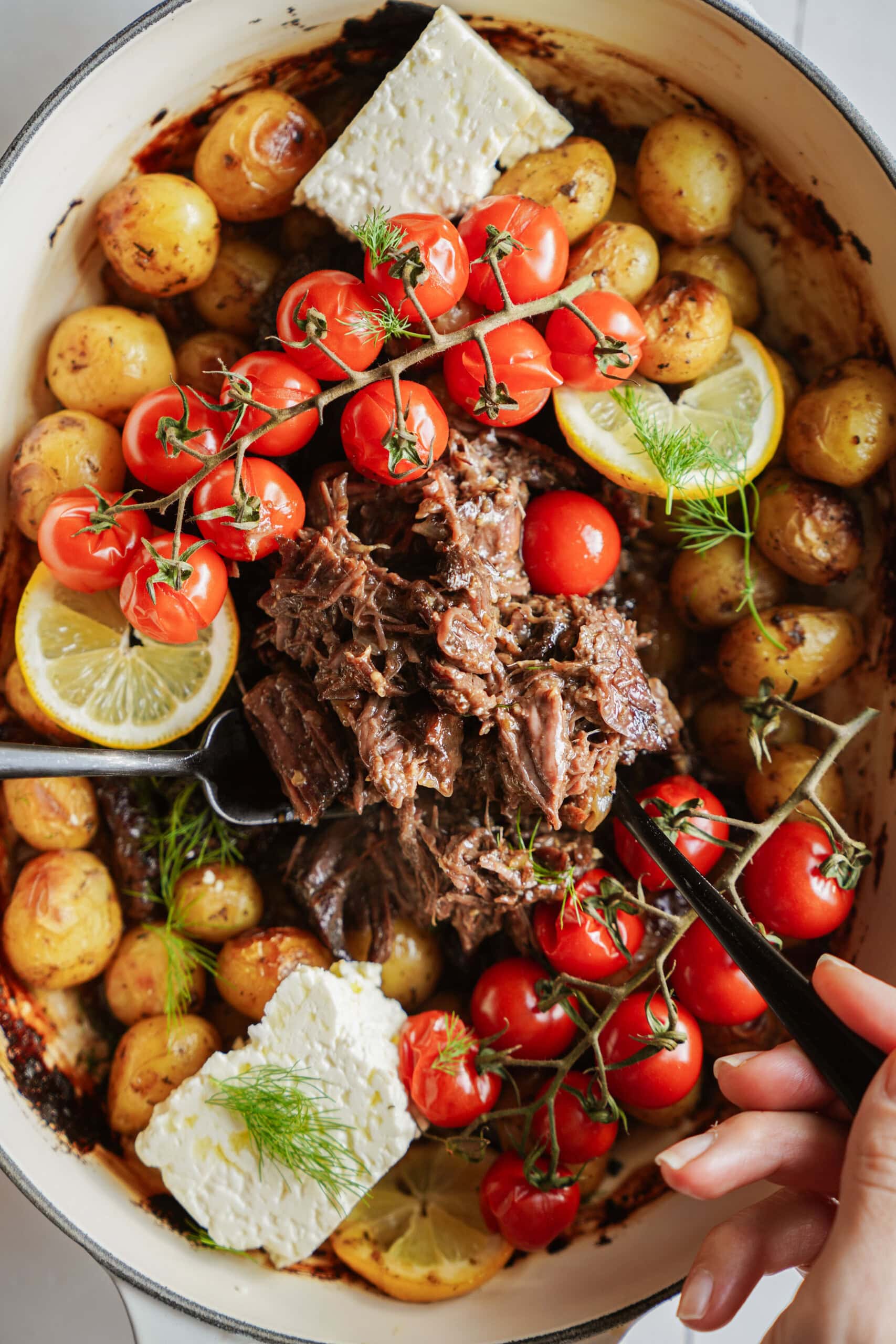
The main event of Easter Sunday, however, is undoubtedly the lamb. Traditionally, a whole lamb is roasted on a spit (
souvla) outdoors, turning slowly over charcoal for hours. This communal ritual is a spectacle of flavor and festivity, drawing families and friends together. For those without the space or equipment for a spit roast, oven-roasted lamb, often seasoned with garlic, lemon, and oregano, or a succulent
kleftiko (slow-cooked lamb baked in parchment paper), provides an equally delicious centerpiece.
The Easter table groans under the weight of an array of side dishes:
*
Roasted Potatoes: Often cooked alongside the lamb, absorbing all the delicious juices.
*
Salads: Fresh, vibrant Greek salads (
Horiatiki) bursting with tomatoes, cucumbers, olives, and feta.
*
Dolmades: Grape leaves stuffed with herbed rice.
*
Spanakopita: Now enjoyed with its full complement of rich feta and eggs.
*
Tiropita: Flaky cheese pies.
*
Assorted Mezedes: A spread of appetizers to share.
And, of course, no Greek Easter feast is complete without plenty of the homemade
Tsoureki, alongside other sweet treats like crunchy
koulourakia (butter cookies) and perhaps a decadent
galaktoboureko (custard pie). Music, dancing, and heartfelt conversations flow as families rejoice and celebrate together, a true testament to the power of food in bringing people closer. If you're fortunate enough to visit Greece during this time, consider exploring a village or a family-run tavern for an authentic taste of this unparalleled celebration.
Greek Easter is more than just a religious holiday; it’s a vibrant, multi-sensory experience that encompasses deep spiritual reflection, cherished family traditions, and an extraordinary culinary journey. From the disciplined fasting of Sarakosti, which inspires an incredible array of plant-based dishes, to the solemnity of Holy Week, and finally, the explosive joy and lavish feasts of Easter Sunday, every step is infused with meaning and flavor. This comprehensive
greek easter guide aims to unveil the heart of this magnificent celebration, inviting you to savor its unique customs and, most importantly, its unforgettable food.