The Heart of Hellenic Culture: Why Greek Easter Outshines Christmas
The air vibrates with anticipation, a symphony of laughter, clanging pots, and the irresistible scent of citrus and warm bread. This isn't just a holiday; it's an immersive experience that captivates all senses and soul. For Greeks, Easter isn't merely a religious observance; it is, without question, the most significant cultural and spiritual event of the year, consistently eclipsing Christmas in its grandeur, duration, and heartfelt celebrations. If you've ever wondered why your Greek friends disappear for a week every spring, diving deep into traditions and feasting, you’re about to discover why this period holds such unparalleled importance. This comprehensive
greek easter guide will unveil the unique customs, profound symbolism, and culinary delights that make Greek Easter truly extraordinary.
While Christmas often leans towards commercial festivities globally, Greek Easter retains a deeply rooted sense of community, family, and faith. It’s a louder, longer, and undeniably more delicious affair, a culinary marathon that culminates in an epic feast. Growing up in a Greek household, Christmas might have been nice, but Easter was everything – a time when the entire household, indeed the entire nation, comes alive with an energy that is palpable and infectious.
Understanding the Dates: The Julian Calendar and Beyond
One of the first distinctions in our
greek easter guide is the date itself. Unlike Western Easter, which adheres to the Gregorian calendar, Greek Easter follows the older Julian calendar. This ecclesiastical difference means that Greek Easter often lands on a different date, typically later, than its Western counterpart. For instance, in 2024, Greek Easter Sunday fell on May 5th, while in other years, like the April 12th mentioned in earlier traditions, it can be much earlier. A crucial rule is that Greek Easter always follows the Jewish Passover, further influencing its annual timing.
However, the specific date, while a unique identifier, pales in comparison to the profound significance of the holiday itself. For Greeks, this timing isn't just a calendar entry; it marks the climax of a spiritual journey, a period of deep reflection and joyful anticipation that builds over many weeks. The variable date only adds to the mystique and special anticipation each year.
The Journey of Sarakosti: A Culinary and Spiritual Transformation
The path to Greek Easter is a transformative one, beginning with a 40-day period known as "Sarakosti" (Lent). This fasting period is a cornerstone of the spiritual preparation, traditionally involving abstinence from meat, dairy, eggs, and often certain fish. But beyond the dietary restrictions, Sarakosti is a time for introspection, cleansing, and a renewed focus on faith.
The 40 Days of Fasting (Sarakosti): Beyond Dietary Restrictions
While the strict observance of Sarakosti for the full 40 days is a personal choice, many Greek families, including mine, traditionally intensify their fasting during the last week, Holy Week. There’s no judgment regarding individual levels of observance; the spirit of Sarakosti lies in mindful eating and spiritual discipline. What's truly remarkable is how Greek cuisine shines during this time. Far from being restrictive, Lenten Greek dishes are a testament to the creativity and deliciousness of plant-based cooking, offering a bounty of flavors that appeal to everyone, whether observing Lent or simply seeking incredible meatless meals.
For a deeper dive into these culinary wonders, you might enjoy our article,
Greek Easter: A Culinary Guide to Lent, Feasts & Traditions. During Sarakosti, you’ll find:
- Lenten Soups and Mains:
- Vegan Avgolemono: A surprising twist on the classic, this creamy, lemony comfort in a bowl warms both body and soul without dairy or eggs.
- Vegan Moussaka: All the comforting layers and rich flavors you expect from moussaka, reimagined without meat or dairy, proving plant-based can be equally satisfying.
- Vegan Greek Meatballs: Herby, hearty, and perfect served with warm pita bread or tucked into a sandwich.
- One-Pot Greek Vegetarian Pasta: A weeknight-friendly marvel, bursting with Mediterranean flavors.
- Lenten Dips, Sides, and Snacks:
- Vegan Spanakopita: Flaky, crispy, and savory, this spinach pie is just as satisfying in its Lenten form.
- Fava Bean Hummus: A smooth and bright alternative to chickpea hummus, perfect for dipping.
- Skordalia: This bold, garlicky potato dip is naturally vegan and packs a powerful flavor punch.
- Fakes (Greek Lentil Soup): A simple, traditional, and incredibly nourishing lentil soup, a staple during fasting periods.
Seafood Days: A Lenten Respite
On certain significant days within Sarakosti, such as Palm Sunday, fish is traditionally permitted, offering a delightful culinary respite. This allows for lighter, yet equally flavorful, dishes like Sheet Pan Salmon with lemon and herbs, or simple grilled fish and various seafood preparations, providing a welcome change while still adhering to the Lenten principles.
Holy Week: The Climax of Tradition and Festivity
As Sarakosti draws to a close, the atmosphere intensifies, signaling the arrival of Holy Week, or "Megali Evdomada." This is when the preparations truly begin to bloom into a vibrant celebration.
Preparing for the Feast: Tsoureki and Aroma
By Holy Wednesday, the entire house begins to smell divine – a fragrant symphony of butter, orange zest, and mastic, a unique resin that lends an aromatic depth. This is the herald of
Tsoureki, the traditional Greek sweet, braided holiday bread. Its preparation is a ritual in itself, resulting in a soft, slightly chewy bread that symbolizes the resurrection of Christ and is eagerly anticipated by all. The braiding pattern is often intricate, a testament to the care and love poured into its making.
Holy Thursday: The Symbolism of Red Eggs
Holy Thursday is dedicated to one of Greek Easter’s most iconic traditions: dyeing eggs red. These eggs are not merely decorative; they are potent symbols. The vibrant red color represents the blood of Christ, while the egg itself symbolizes renewal and the resurrection. Growing up, stirring the dye pot was always *my* job, and yes, at least one shirt fell victim to the crimson dye every year!
On Easter Sunday, these beautifully dyed eggs become props for a lively game called
tsougrisma. Family members choose an egg and tap it against an opponent's egg. The goal is to crack the opponent's egg while keeping your own intact, a playful yet profound symbolism of Christ conquering the tomb and death itself. For more on these culinary and symbolic delights, check out
Red Eggs to Tsoureki: Greek Easter's Essential Food Traditions.
Good Friday: Solemn Reflection
Good Friday is arguably the most solemn day of Holy Week. The evening air is filled with the gentle scent of jasmine and incense, carried from the churches. Church bells toll mournfully, and a hushed quiet descends upon villages and cities alike. This is a day for profound reflection, marking the crucifixion of Christ. Many observe a very strict fast, and processions of the Epitaphios (an intricately decorated bier representing Christ's tomb) wind through streets, creating an atmosphere of deep reverence and communal mourning.
Holy Saturday & Easter Sunday: The Grand Celebration
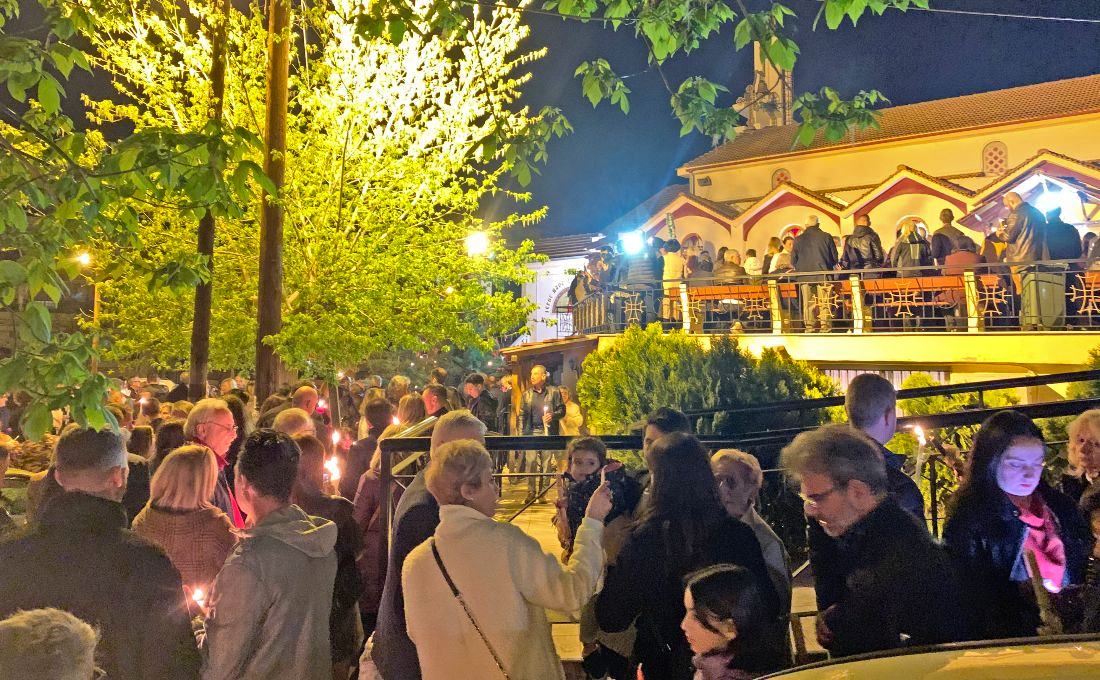
The somber mood of Good Friday gives way to a vibrant awakening on Holy Saturday evening. The Midnight Resurrection Liturgy, or "Anastasi," is the spiritual climax. As midnight strikes, churches dim their lights, and the priest emerges from the altar carrying a single, flickering candle, proclaiming "Christos Anesti!" (Christ is Risen!). The Holy Light is then passed from candle to candle, swiftly illuminating the entire church, symbolizing the spreading of Christ's resurrection to all. The joyous reply, "Alithos Anesti!" (Truly He is Risen!), echoes through the air, often accompanied by fireworks.
After the church service, families return home to break the Lenten fast. The first meal is traditionally
magiritsa, a flavorful lamb offal soup with avgolemono (egg-lemon) sauce, designed to gently ease the body back into richer foods.
Easter Sunday is the grand culmination, a day of unparalleled feasting and joyous celebration. The star of the show is often lamb roasted slowly on a spit – a sight and smell that is quintessentially Greek Easter. Tables groan under the weight of an abundance of food: fresh salads, roasted potatoes, spanakopita, tiropita, and countless other delicacies. It’s a day for family gatherings, lively music, dancing, and heartfelt expressions of love and gratitude. The celebration extends well into the day, often spilling out into courtyards and public squares, where the community truly comes alive.
Conclusion
From the spiritual journey of Sarakosti to the joyous explosion of Easter Sunday, Greek Easter is a testament to enduring faith, rich cultural heritage, and the power of family and community. It’s an experience that engages all senses, from the aromatic kitchens to the solemn church bells, the symbolic red eggs to the triumphant lamb on the spit. This
greek easter guide has merely scratched the surface of a holiday that, for Greeks, resonates far deeper and brighter than Christmas, weaving together history, spirituality, and an unwavering love for life and tradition. To truly understand the Greek spirit, one must immerse themselves in the magic of Greek Easter.